

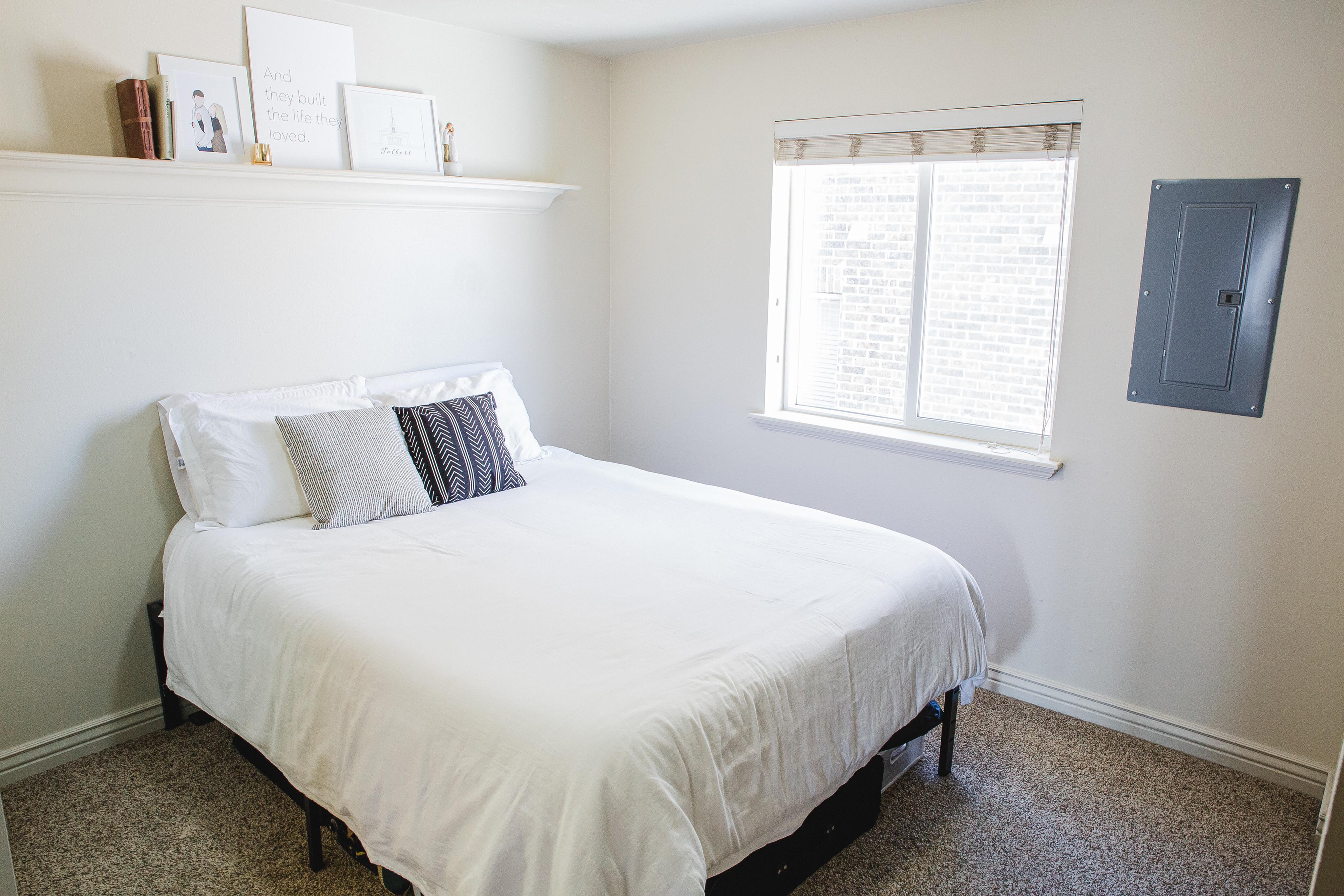
For most people who plan to stay in Rexburg for only a few years, renting is the smarter choice. U.S. Census data puts Rexburg’s median home value at $384,000 and its median gross rent at $959 per month. With 30-year mortgage rates above 7% in fall 2026, a typical mortgage payment can easily run more than double a typical rent. Buying makes more sense if you plan to stay at least five years, have a down payment saved, and want to build equity. Renting offers flexibility, lower upfront costs, and no responsibility for repairs.
If renting fits your plans, University Courtyard offers one-bedroom apartments directly across the street from BYU-Idaho. Furnished and unfurnished options make it easy to settle in close to campus without the commitment of buying.
What Does Housing in Rexburg Cost?
Rexburg is a renter-heavy town. According to U.S. Census QuickFacts, only 23.5% of Rexburg’s occupied homes are owner-occupied. That makes sense for a college town where many residents live in the area for a few years while attending school or starting a career.
The same Census data, based on 2019–2023 American Community Survey estimates, shows:
- Median value of owner-occupied homes: $384,000
- Median gross rent: $959 per month
- Median monthly owner costs with a mortgage: $1,534
Keep in mind that Census figures average several years of data, and current home prices and mortgage rates can be higher than these numbers reflect.
How Do Mortgage Rates Affect Buying in Rexburg?
Mortgage rates have a big impact on what buying costs each month. Freddie Mac’s weekly survey showed the average 30-year fixed-rate mortgage at 7.28% as of Oct. 1, 2026, up from 6.34% a year earlier.
Here’s an example using Rexburg’s Census median home value:
- Home price: $384,000
- 20% down payment: $76,800
- Loan amount: $307,200
- Estimated principal and interest at 7.28%: about $2,100 per month
That estimate doesn’t include property taxes, homeowners insurance, or maintenance. Even before those costs, it’s more than double Rexburg’s median gross rent of $959. Your actual payment depends on your credit, down payment, and lender, so talk with a loan officer for real numbers.
How Do Renting and Buying Compare in Rexburg?
Beyond monthly cost, renting and buying differ in flexibility, responsibility, and long-term value. Here’s a side-by-side look:
| Factor | Renting | Buying |
|---|---|---|
| Upfront cost | Security deposit and first month’s rent | Down payment, closing costs, and inspections |
| Monthly cost | Rent, utilities, and renters insurance | Mortgage, taxes, insurance, utilities, and maintenance |
| Flexibility | Easy to move when your lease ends | Selling takes time and costs money |
| Repairs | Handled by property management | Owner’s responsibility |
| Equity | None | Builds over time |
| Best for | Shorter stays and changing plans | Long-term stays and stable income |
What Are the Benefits of Renting in Rexburg?
Renting is a practical fit for Rexburg’s many residents who are in a season of change, whether that means school, a new job, or a first move.
Lower Upfront Costs
A security deposit is far smaller than a down payment and closing costs. That leaves more of your savings available for school, emergencies, or future goals.
Flexibility to Move
If you graduate, take a job in another city, or simply want a different neighborhood, renting lets you move without having to sell a home first.
No Surprise Repair Bills
When the furnace or water heater breaks, your property’s maintenance team handles it. Rexburg’s snowy winters make that especially valuable, since you won’t be responsible for things like roof repairs.
Walkable Locations Near Campus
Many rentals sit close to BYU-Idaho and downtown Rexburg, where buying a home would be harder to find and more expensive.
When Does Buying a Home in Rexburg Make Sense?
Buying can be a great long-term investment for the right person. It usually makes the most sense when you can answer yes to these questions:
- Do you plan to stay at least five years? Staying longer helps offset the costs of buying and selling.
- Do you have a down payment saved? A larger down payment lowers your monthly payment.
- Do you have an emergency fund? Homeowners need savings for unexpected repairs.
- Is your income stable? Reliable income makes long-term payments easier to manage.
- Have you been pre-approved? A lender can show you exactly what you can afford.
If several of these answers are still uncertain, renting while you save and plan is a smart, low-risk choice. For decisions specific to your finances, talk with a lender or financial advisor.
Should You Rent or Buy in Rexburg?
For many people in Rexburg, especially those planning to stay only a few years, renting offers the best balance of cost and flexibility. Rexburg’s median rent is well below what a typical mortgage payment would cost at today’s rates, and renting means no down payment and no repair bills. Buying becomes more attractive when you plan to stay long-term and have savings in place.
University Courtyard makes renting simple, with one-bedroom apartments directly across the street from BYU-Idaho. Choose from furnished and unfurnished 1x1 floor plans, plus a larger deluxe layout. Residents can enjoy a quiet, community-focused home that keeps campus, classes, and downtown Rexburg close.
Frequently Asked Questions
Is it cheaper to rent or buy in Rexburg?
Renting is usually cheaper month to month. Rexburg’s median gross rent is $959, while a mortgage on a median-valued home could cost around $2,100 a month in principal and interest at fall 2026 rates.
What is the median home value in Rexburg, Idaho?
According to U.S. Census QuickFacts, the median value of owner-occupied homes in Rexburg is $384,000, based on 2019–2023 estimates.
What is the average rent in Rexburg?
Census data shows Rexburg’s median gross rent is $959 per month, based on 2019–2023 estimates. Current rents vary by unit size and location.
Why do so many people rent in Rexburg?
Rexburg is a college town, and many residents live there for a few years while attending school or starting a career. Only 23.5% of Rexburg’s occupied homes are owner-occupied.
How long should you stay in a home before buying makes sense?
Many experts suggest staying at least five years, so you have time to build equity and offset the costs of buying and selling.